


In August, I was interviewed over the phone by a journalist at the National Post. That week I was enjoying a beautiful week in Point au Baril with my family, relishing in the last bit of summer, taking in the joy of my children (faces smeared with ice cream and bodies filled with mosquito bites), and feeling deep gratitude for beautiful Canadian summers and the calmness of Georgian Bay. Those Canadian summers by the water are so special.
The article was published last week. Here is the link titled: Canada’s young entrepreneurs are fleeing south. We need to keep them here
Is it high taxes? Too much red tape? A lack of investment? Experts say we can stop the U.S. swallowing up Canadian talent
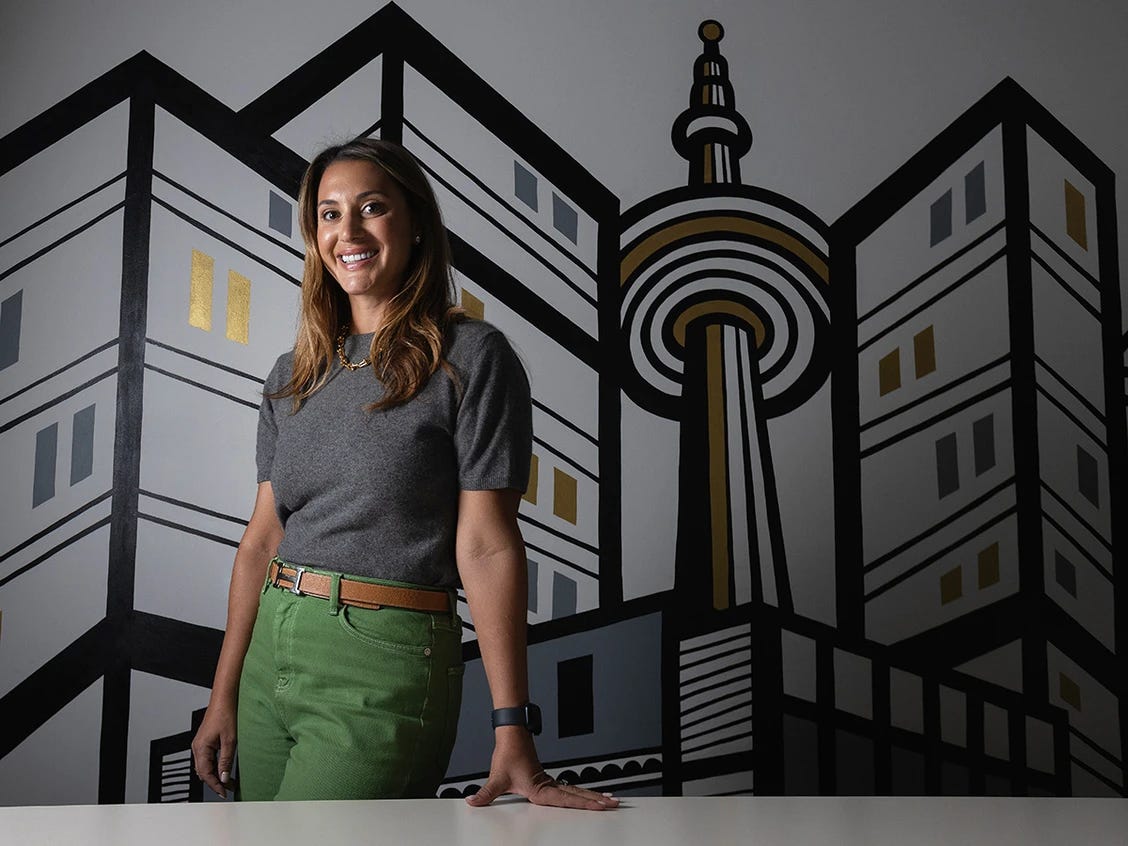
The trend of young ambitious entrepreneurs leaving Canada is real and it makes me sad. I have had quite a few friends leave for the sunny state of Florida this past year. I want to use this platform to talk honestly about what it has been like building Homekin here, a business I started building here full-time January 2026.
Starting at DMZ
Homekin started at DMZ Incubator in June 2026 after a rigorous application with only 3.8% of startups accepted into the program. The mentorship and community here has been so incredible in just 4 short months- collaboration with other startups, and advice for creative solutions at a stage when I didn’t have a team big enough to problem-solve alone. That kind of peer network is easy to undervalue until you are spending countless sleepless nights trying to figure out a pricing strategy for a new product, or how to nail a product feature.
In the article, I highlight the support and collaboration I have found at DMZ. It is the kind of ecosystem Canada should protect, celebrate and expand.
Being a female founder

As a female founder building a tech company in a category that most people often see as purely aesthetic, there have definitely been moments where I have had to over-emphasize the total addressable market, and watch eyes glaze over as I explain the average order value per room of a customer. For some reason, consumer tech just isn’t as exciting here in Canada and there is way less venture capital allocated to these types of businesses, which has made me realize that as we focus on a seed round we will be focusing on raising in the United States.
When I talk about interior design and shopping for your home and lifestyle, it is easy for the conversation to stop at the finished photograph. Our work also involves building the platform, the algorithm matching, the hundreds of vendor relationships across both countries, and the operations behind it. I want more women who come from design, retail and other traditionally underestimated sectors to be seen as builders of serious technology businesses. Expertise gained close to the customer is an asset when building a product.
The Canadian advantage, and friction
There is insane talent here in Canada. There is so much to build on here - creative industries, strong communities, talented people, and programs like DMZ that connect founders to people who have done hard things in the past.
At the same time, raising growth capital can be difficult when a company sits between familiar investment categories. In the article, I described conversations in which Canadian venture investors seemed more comfortable with fintech or health tech than with our model. Support programs like SRED grant can help, but applications and reporting take time that a small team also needs for customers and product. These are my experiences, and they are reasons to make our startup ecosystem easier to navigate.
The U.S. offers a much larger potential customer base for Homekin. Expanding there is a business opportunity, not a rejection of our Canadian roots. My hope is that companies like ours can grow across borders while continuing to create value, jobs and expertise at home.
Tariffs bring the border into the living room
Truthfully, 95% of our vendors are U.S. based, and I look to our neighbours south of the border as partners, allies, and friends. The confusion around tariffs needs to be understood with calm and clarity. A piece of furniture might be sold by a U.S. brand, manufactured elsewhere, shipped across a border and delivered to a Canadian client. The cost depends on the product and its origin, among other details. Canada’s counter-tariff list effective September 8, 2026 includes certain U.S.-origin furniture and lighting categories, with rates that vary by classification.
I would be lying to say that the the past few weeks has required more time to navigate quotes, timelines, sourcing decisions, but ultimately it has made us grittier and pushed us to build better product data and more resilient sourcing relationships. Our customers are the most important - and we will always work to provide practical and fair responses.
I want to see a Canada that helps founders keep building here: more conviction about business outside the unusual venture categories in Canada, simpler paths to support a stronger bridge from our first customers to international scale. DMZ has shown me what thoughtful support can look like. And at the end of the day, I feel proud to be building a business that provides more opportunity for both design experts and consumers to live beautifully in both Canada and the United States.
Read the full National Post feature here.
Natasha Penzo is the founder and CEO of Homekin.